
 &
& 


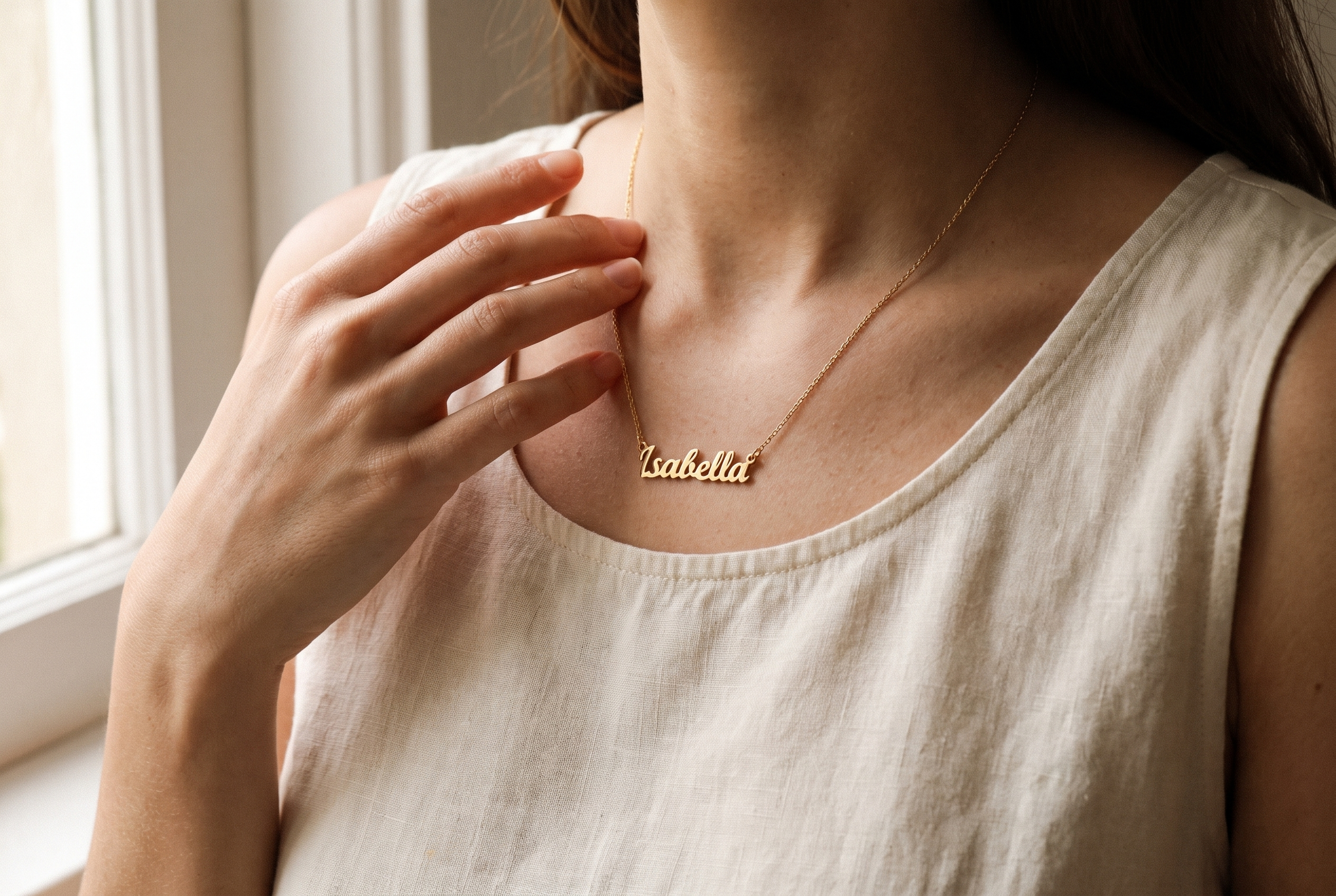
The personalised jewellery trends that last all move in the same direction: smaller pieces, worn in combination, with the meaning turned inward. The statement name necklace has not gone anywhere, but what has changed is that it is now the anchor of a layered look rather than the whole of it.
1. Layering, with real spacing
Layered chains remain the dominant look, and the version that works has at least 5cm between lengths so pendants sit apart rather than tangling. Two chains is easier to wear daily than three. Put the personalised piece on the shortest chain where it reads first, and keep the rest plain. A custom-cut name necklace is the usual anchor.
2. Slim bands, stacked over time
Stacking has replaced the single statement ring, and slim 3mm engraved bands are the format because they sit flush against each other. The pattern is to add one at a time, at births or milestones, rather than buying a set. A stackable ring per person is now more common than one wide ring carrying every name.
3. Coordinates and handwriting over quotes
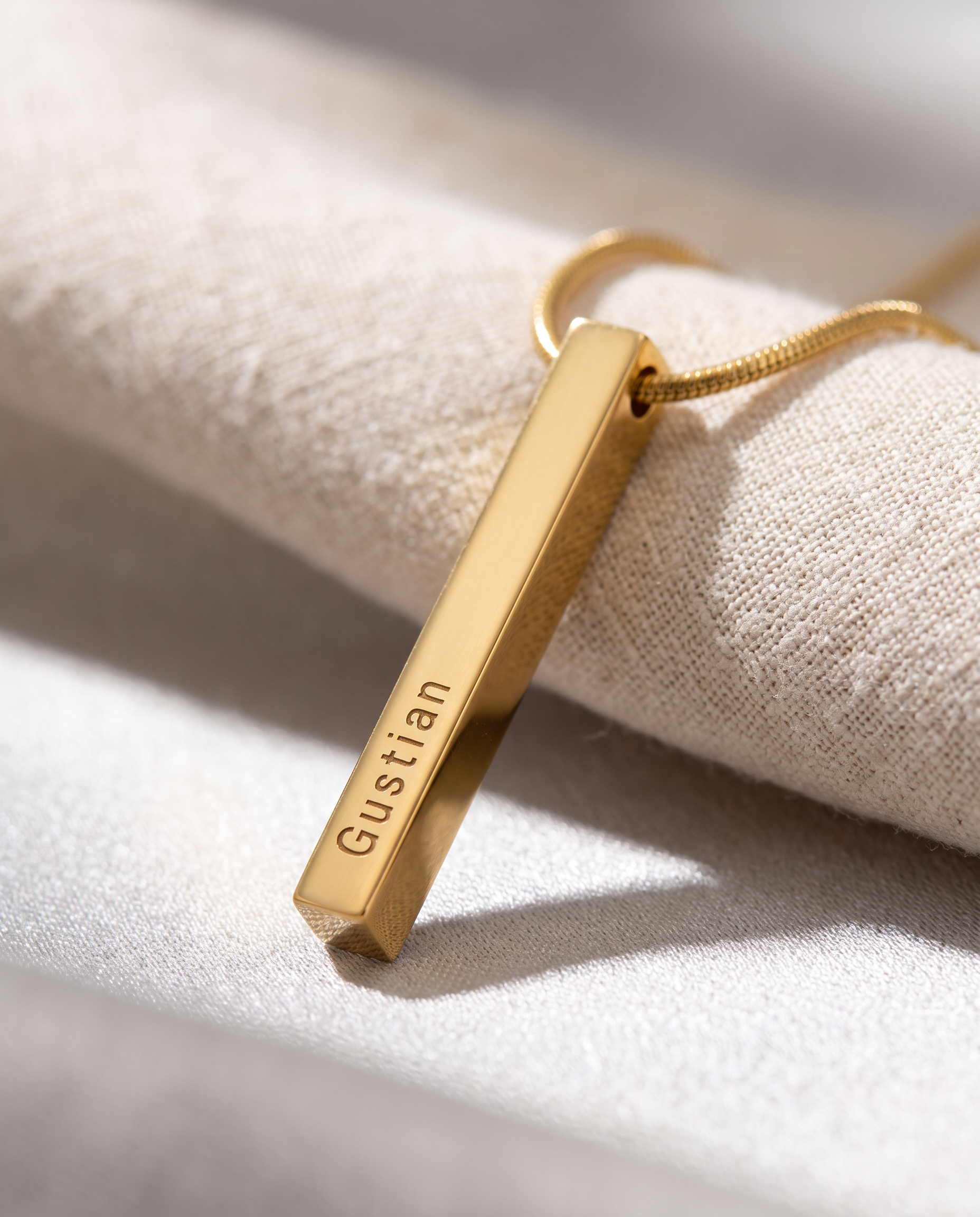
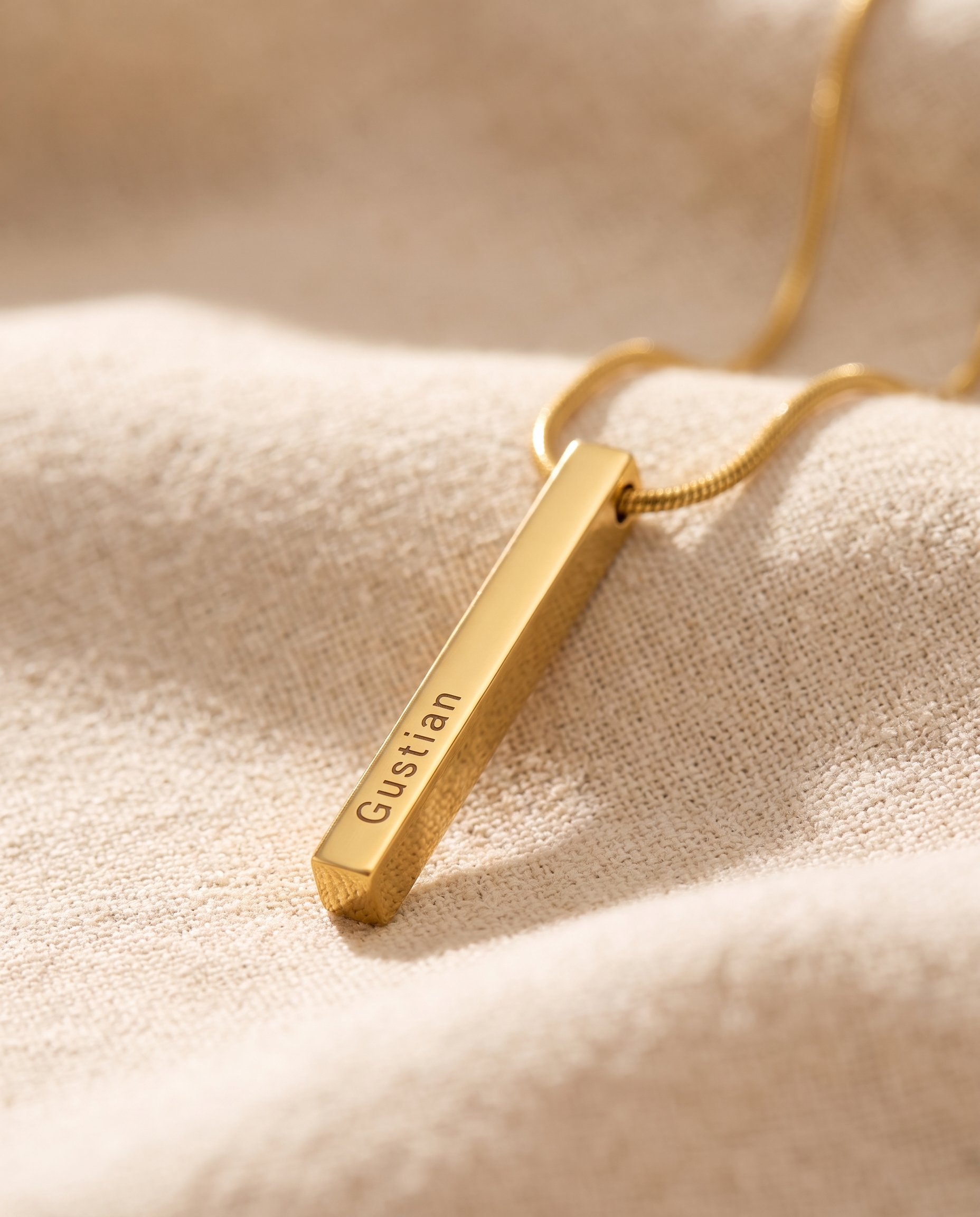
Engraved quotations are giving way to information: GPS coordinates of a place, a date in an unusual format, or a few words reproduced in someone's actual handwriting. The reason is durability of meaning. A quotation dates and eventually reads as somebody else's; coordinates of a house do not. A vertical bar necklace is the format this trend runs on.
4. Birth flowers alongside birthstones
Birth flowers are the newer pairing and are growing fastest, marking a month with a flower engraved on the piece as well as the stone. The appeal is legibility: a flower reads to someone who does not know the birthstone chart, so two signals mark the same month. The birth flower and birthstone necklace combines both on one pendant.
5. Mixed tones, done deliberately
Mixing silver and gold has moved from a mistake to a choice, but only when it runs across every piece being worn. One stray tone in an otherwise matched set still reads as an accident. The workable approach is to match whatever is worn daily, usually a watch or a wedding band, and make one contrasting piece the deliberate exception.
What has quietly gone out?
- Long engraved quotations - set too small to read and rarely still true
- Single wide statement rings - replaced by slim bands worn together
- Pieces that come off nightly - anything requiring a routine gets worn twice
- Matching sets bought all at once - collections built one piece at a time get worn more
How do you care for it?
Belle Fever uses Monel Silver, Moneil Gold and Moneil Rose Gold, waterproof and tarnish-resistant tones at a minimum 1.5mm thickness with deep laser engraving cut into the metal rather than marked on its surface. That is what keeps an inscription legible after years of daily handling.
In practice: buff with a dry cloth when it looks dull, wash with warm water and plain soap if that is not enough, work engraved lettering with a soft toothbrush along the letters, rinse and dry after chlorine or salt water, and never use anything abrasive.
Frequently asked questions
What is the biggest personalised jewellery trend right now?
Layered chains anchored by one personalised piece, with slim stacked bands as the equivalent on the hand. Both are about combination rather than a single statement item, and both are built up over time rather than bought at once.
How far apart should layered chains be?
At least 5cm between lengths, and more if the pendants are large. Below that the pendants sit on top of each other, tangle, and the layering stops looking intentional.
Are engraved quotes still popular?
Less so. Coordinates, dates and handwriting have largely replaced them, because a quotation is set small to fit and often stops feeling like yours. Information ages better than sentiment.
What is a birth flower necklace?
A piece engraved with the flower assigned to a birth month, usually alongside that month's birthstone. It marks the month twice, which makes it legible to someone who does not know the birthstone chart.
Can I mix silver and gold?
Yes, if the mix runs across everything you are wearing. Consistent mixing looks deliberate; one odd tone in an otherwise matched set looks accidental.
