
 &
& 


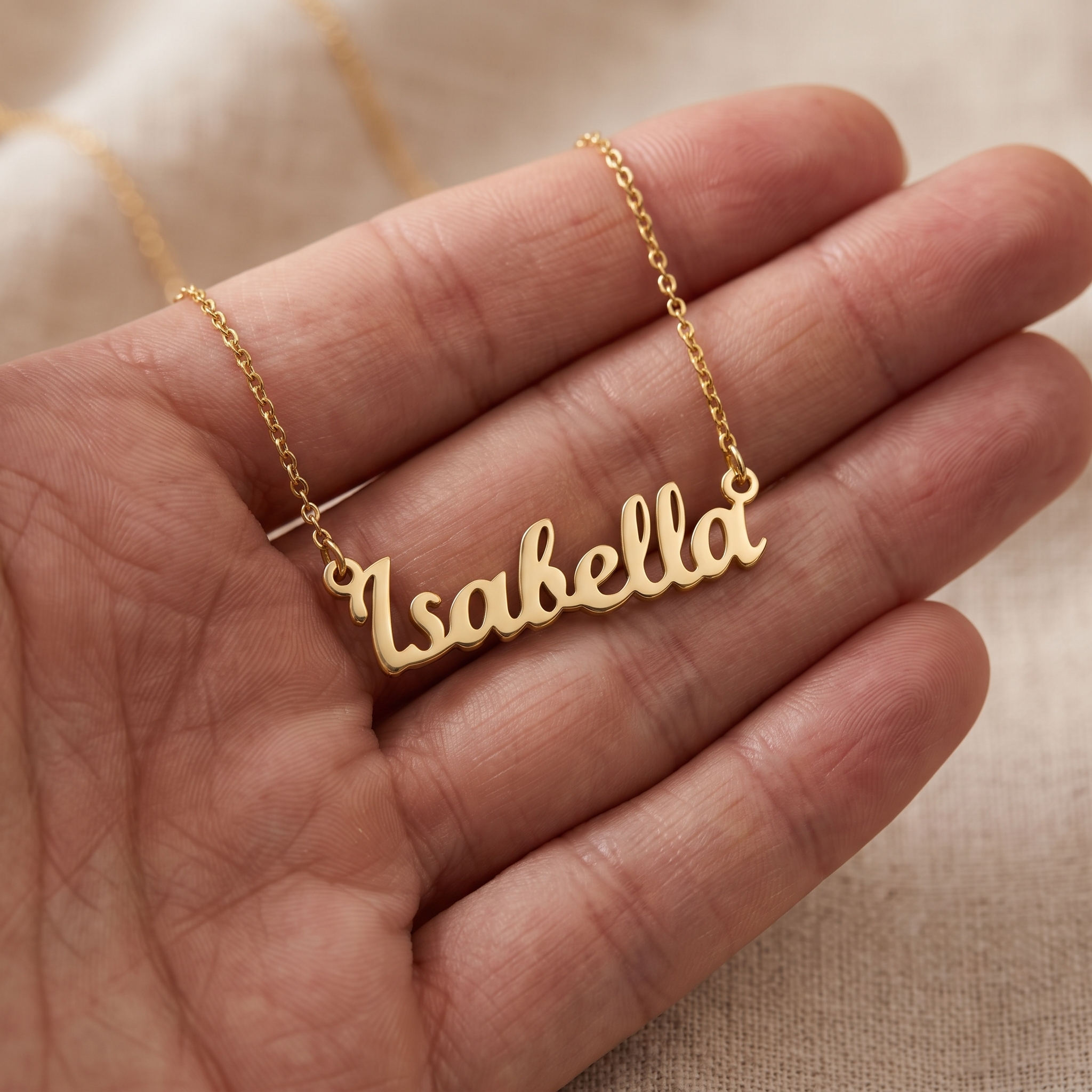
The best-looking jewellery collection is the one that never comes off, because pieces worn constantly become part of how someone looks rather than something added to it. That makes durability a style decision rather than a practical afterthought: anything you have to remove before a shower will be worn twice and then forgotten.
What survives daily wear?
- Tarnish-resistant tones - no polishing, no dulling, nothing to maintain
- Solid metal rather than plating - plating wears through at contact points and cannot be restored
- Enough thickness - a minimum 1.5mm holds its shape through years of knocks
- Cut engraving rather than surface marking - so an inscription stays readable
- Simple silhouettes - fewer joins and catches means less to snag and bend
Belle Fever uses Monel Silver, Moneil Gold and Moneil Rose Gold, waterproof and tarnish-resistant tones at a minimum 1.5mm thickness with deep laser engraving cut into the metal rather than marked on its surface. That is what keeps an inscription legible after years of daily handling.
How do you layer necklaces that stay on?
Space the chain lengths by at least 5cm so the pendants sit apart rather than meeting in the middle and tangling, which is the single reason layered necklaces get taken off. Two is easier to live in than three. Make one piece the focal point, usually the personalised one, and keep the rest as plain chains. A custom-cut name necklace works best on the shortest chain, where it is read first.
How do you build a ring stack?
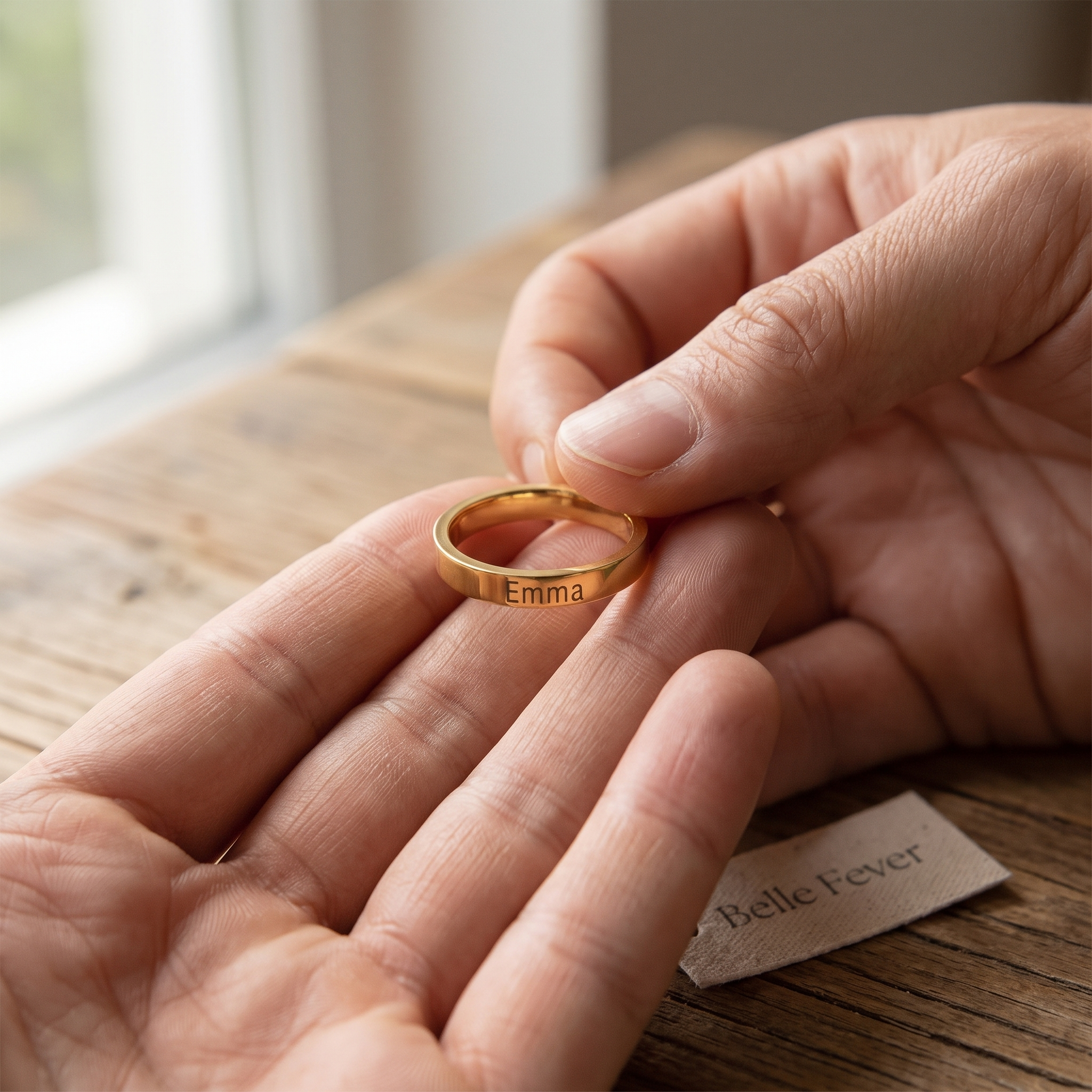
One at a time, at occasions, rather than all at once. Odd numbers look more deliberate than even. Vary the widths rather than repeating a profile. Slim 3mm engraved bands are made for this, and either match every tone or mix them across the whole stack, since a single odd tone reads as an accident rather than a choice.
Can you mix silver and gold?
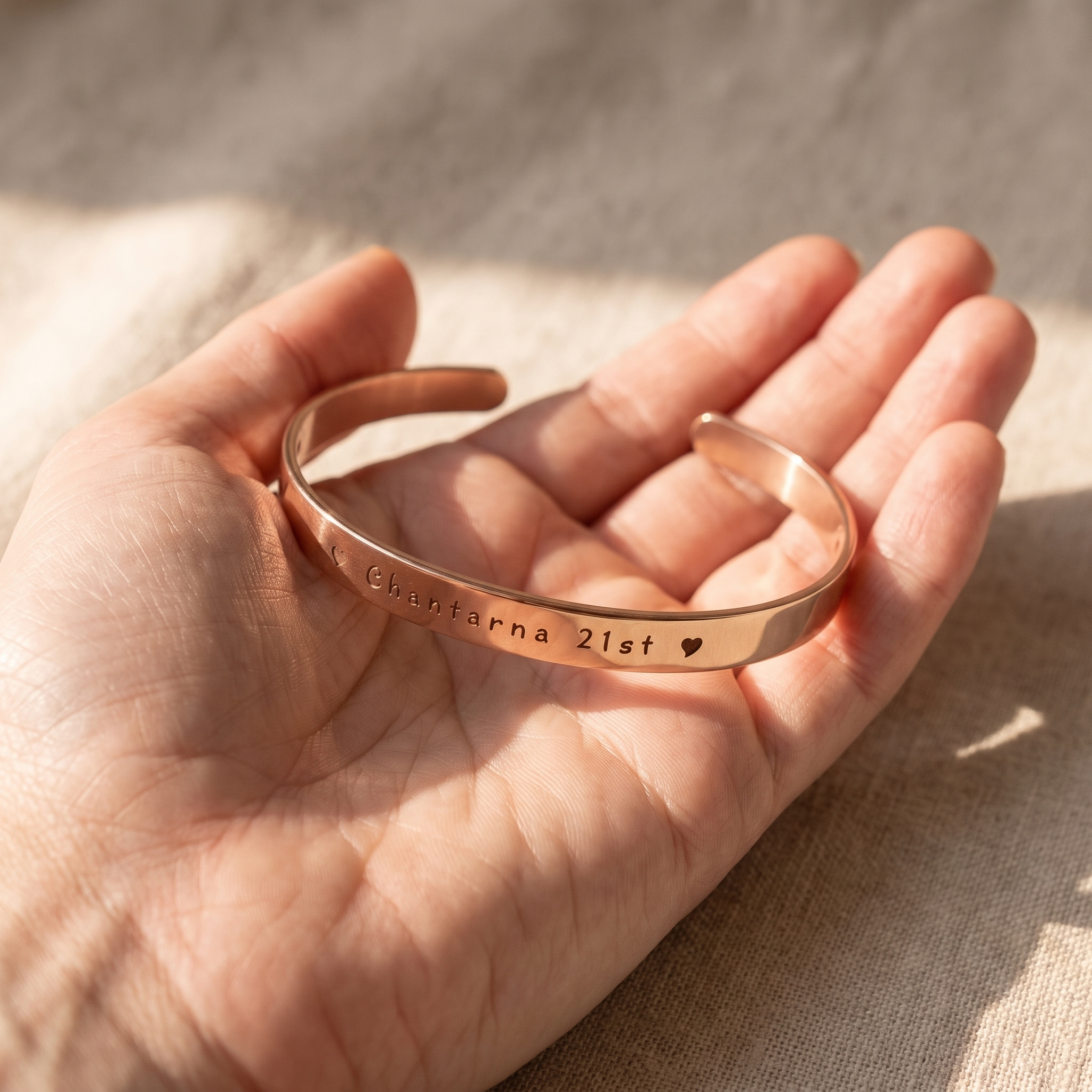
Yes, if you commit to it. Mixed tones look deliberate when the mix runs across everything being worn, and accidental when one item is the odd one out. The simplest approach is to match whatever you already wear without thinking, usually a watch or a wedding band, and let one contrasting piece be the deliberate exception. An open cuff bangle is a good candidate for that role because it sits apart from everything else.
Frequently asked questions
Can I wear jewellery in the shower and the sea?
Yes, on tarnish-resistant tones. Monel Silver, Moneil Gold and Moneil Rose Gold are waterproof and made for daily wear. Rinse and dry after chlorine or salt water, because residue dulls a finish even though it cannot corrode it.
How far apart should layered necklaces be?
At least 5cm between lengths, and more if the pendants are large. Below that the pendants sit on top of each other, tangle, and the layering stops looking intentional.
How many rings should be in a stack?
Three is the usual answer, and odd numbers generally look more deliberate than even. Vary the widths rather than repeating the same profile, and keep the tones either fully matched or fully mixed.
Is plated jewellery worth buying for daily wear?
Not usually. Plating is a thin surface layer that wears through at contact points, and once it does the piece cannot be restored. For something worn every day, solid metal at a decent thickness lasts far longer.
Can I mix metal tones?
Yes, if the mix runs across everything you are wearing. Consistent mixing looks deliberate; one odd tone in an otherwise matched set looks accidental.
